RSS Sarkaryavah Calls for Decolonisation of Mind at IIT Guwahati Youth Conclave
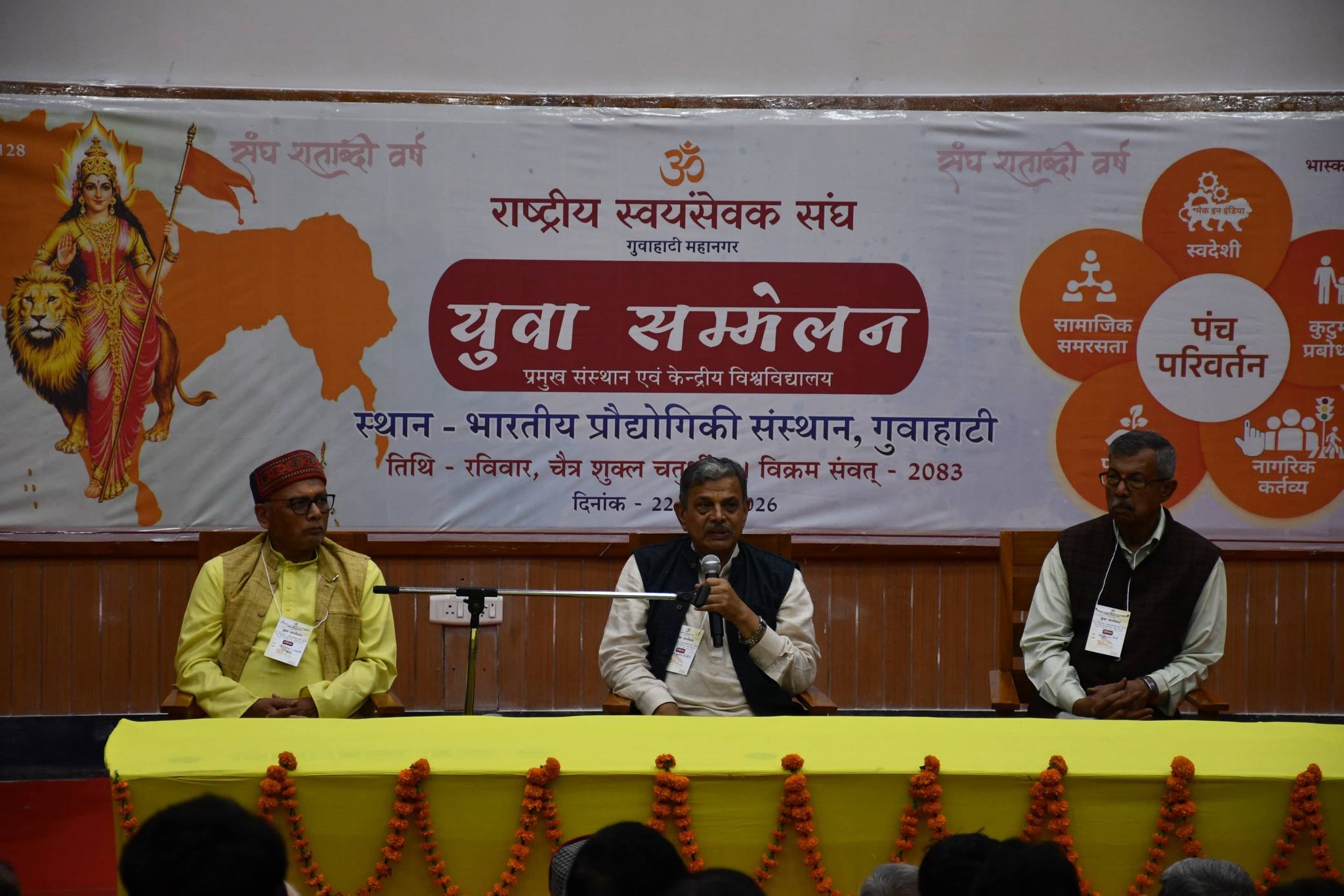
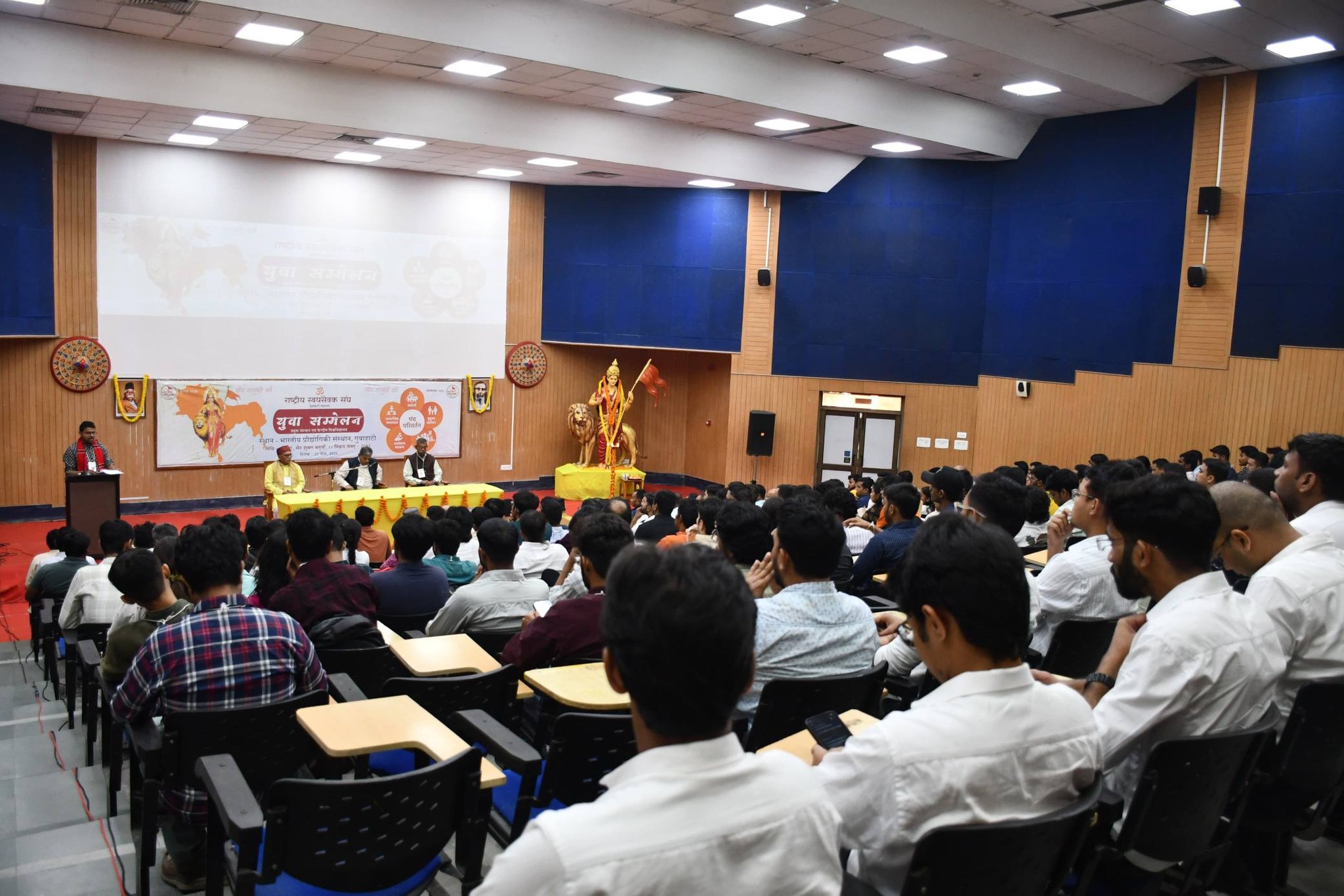
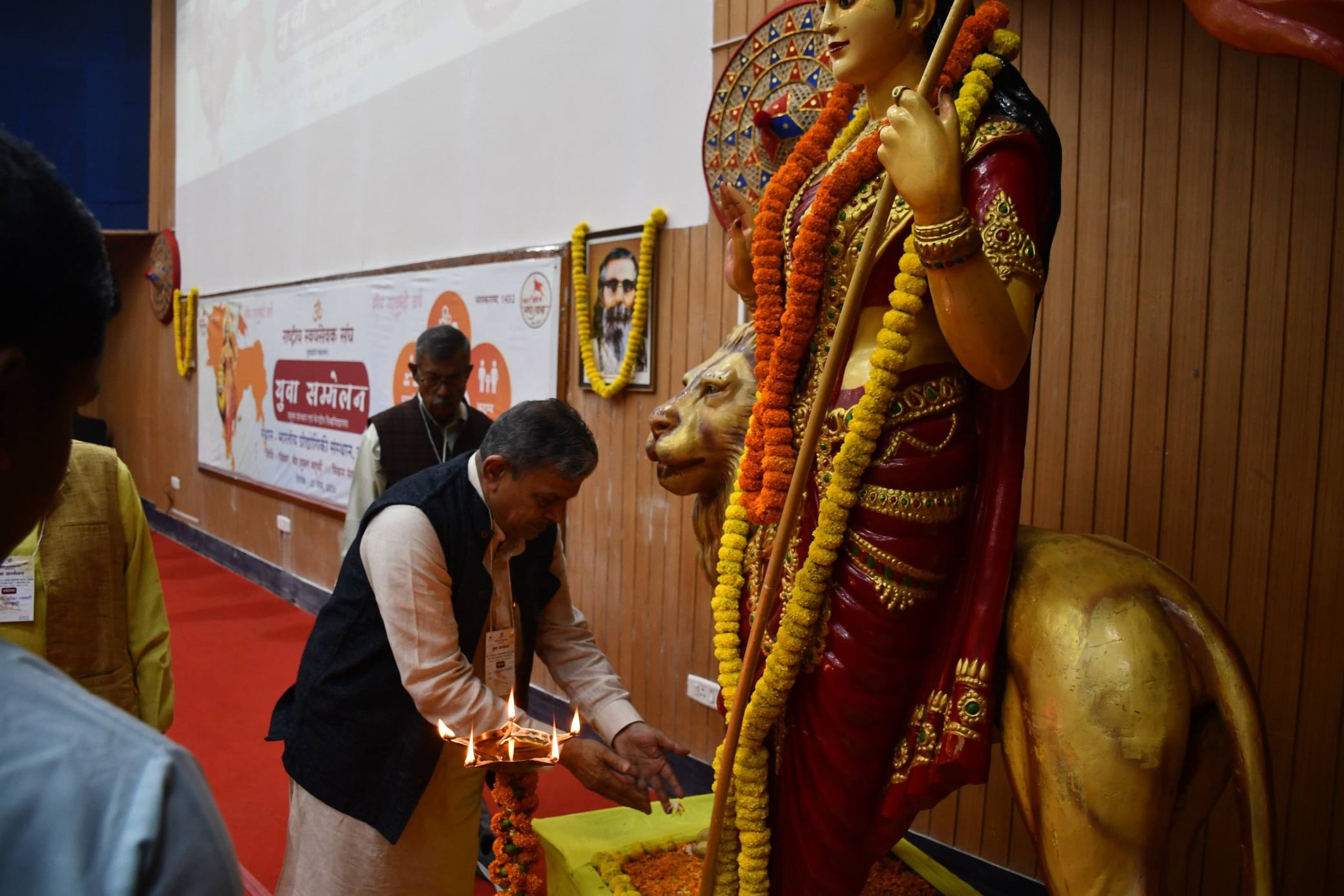
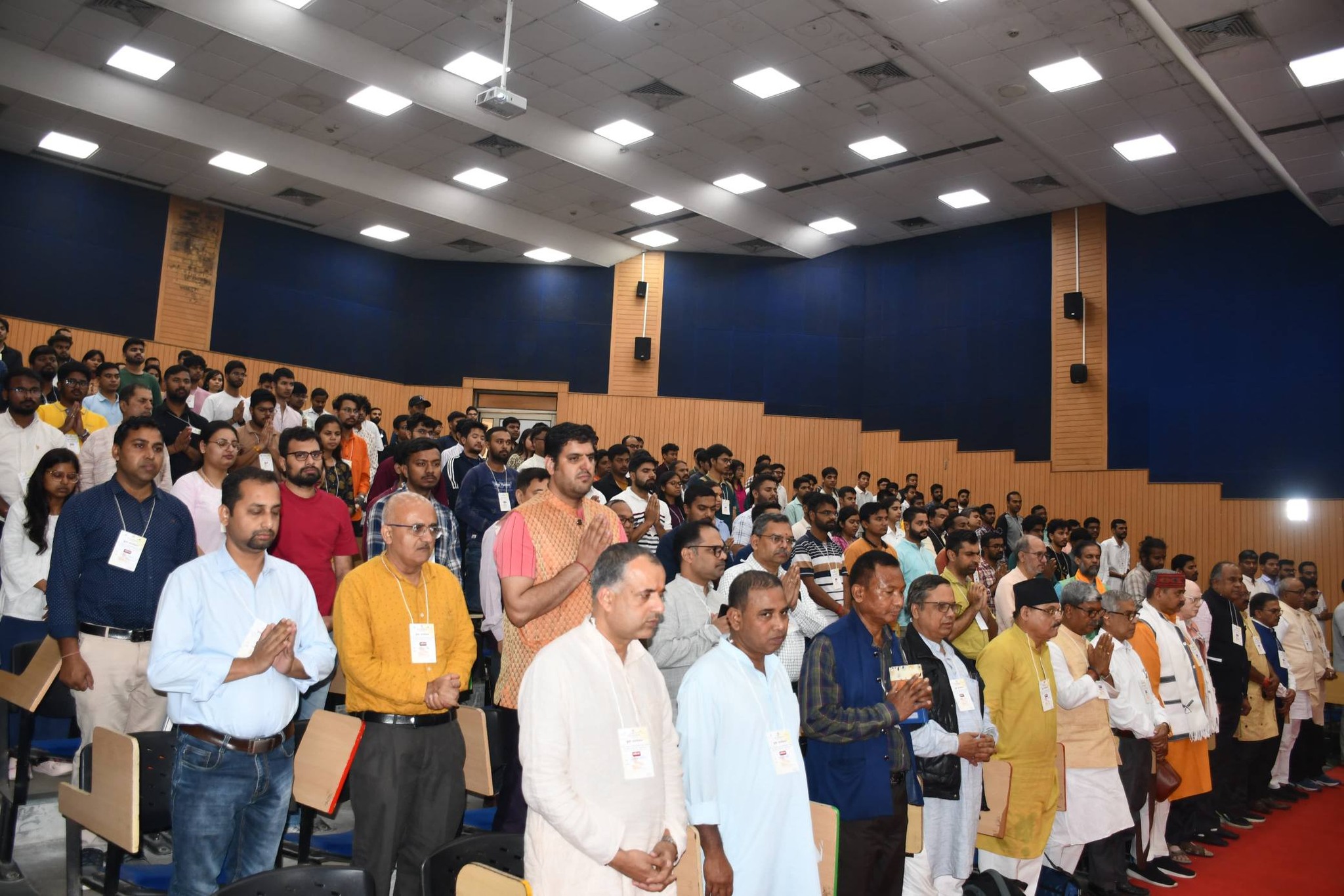
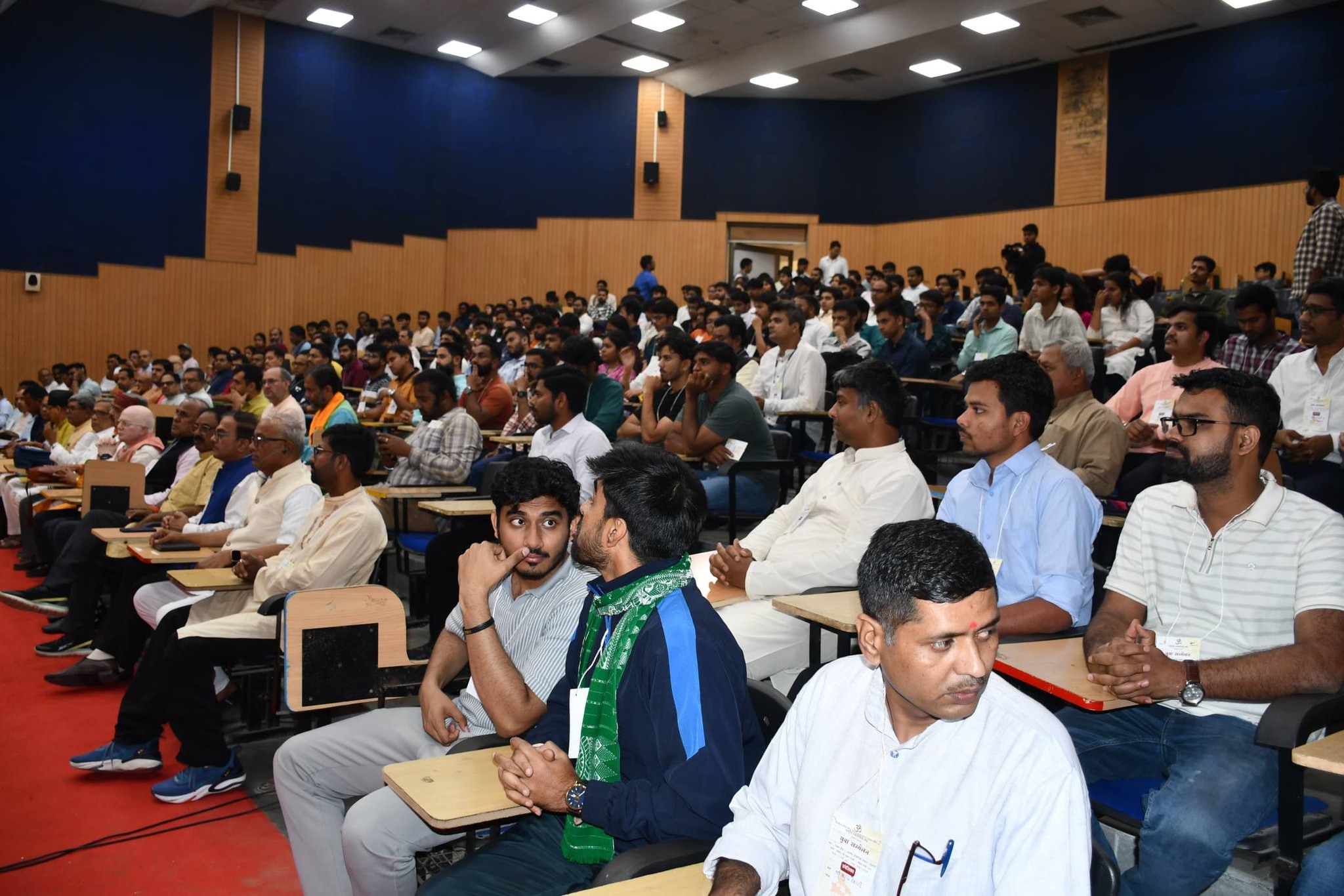
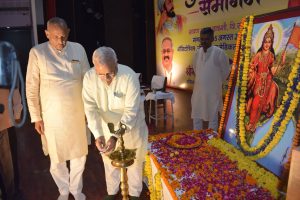
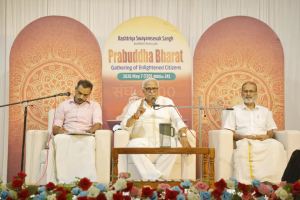
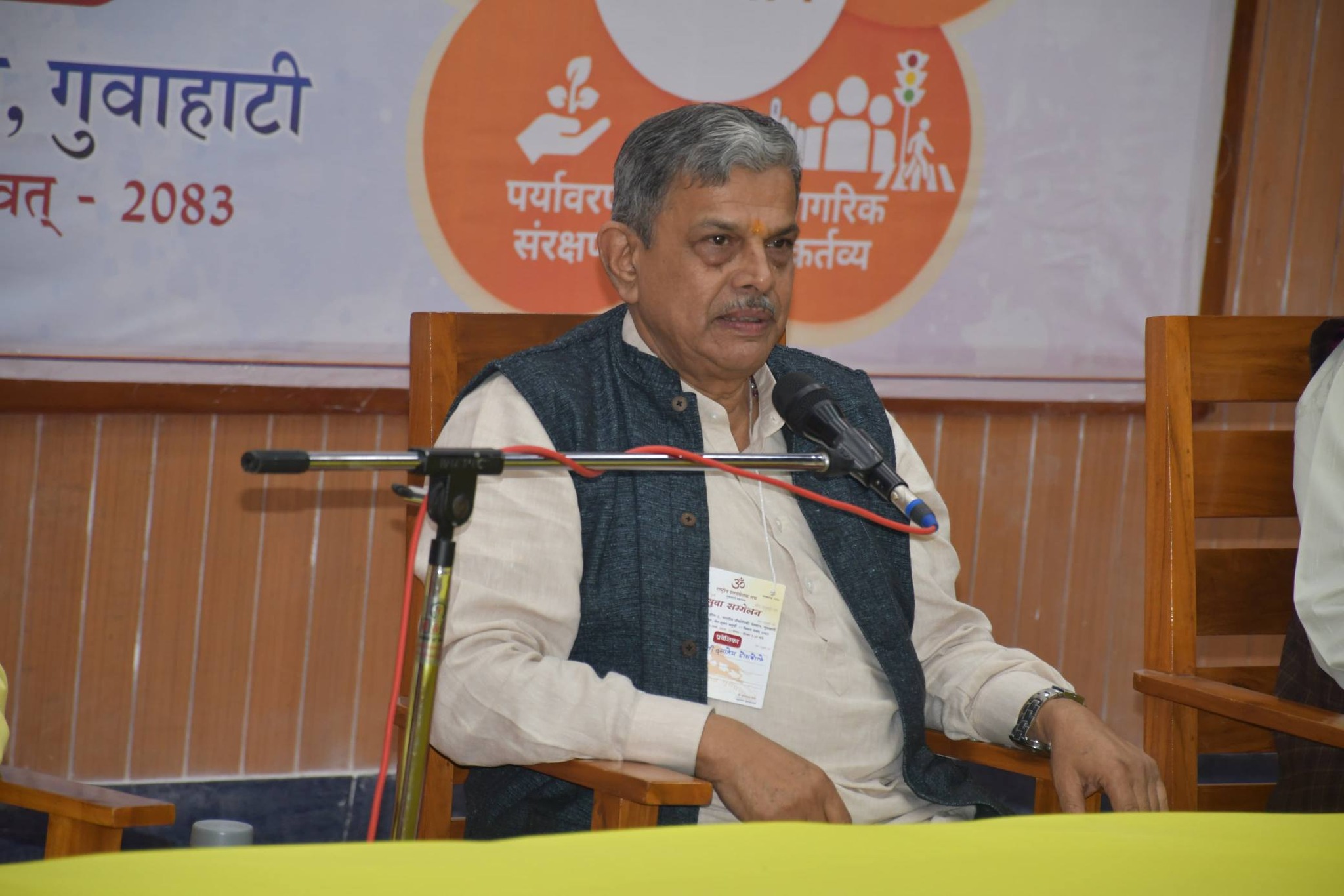
Guwahati, 22 March: As part of the centenary year celebrations of the Rashtriya Swayamsevak Sangh (RSS), the Guwahati Mahanagar organised a ‘Yuva Sammelan’ at the Indian Institute of Technology (IIT) Guwahati. The programme witnessed enthusiastic participation from hundreds of students representing premier institutions of the city, including IIT Guwahati, AIIMS Guwahati, National Law University (NLU), National Institute of Pharmaceutical Education and Research (NIPER-G), Gauhati University, Cotton University, NIT, IIIT and other higher educational institutions.
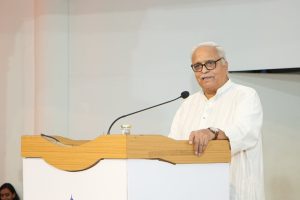
RSS Sarkaryavah (General Secretary) Shri Dattatreya Hosabale delivered the keynote address, describing the Youth Conclave as a “mini Bharat,” representing the country’s diversity and unity through youth drawn from varied academic, linguistic and cultural backgrounds of the country.
In his address, Shri Hosabale emphasised that every Indian language is a national language, while certain languages function as contact Indian languages facilitating communication. He noted that Sanskrit represents the cultural foundation of Bharatiya languages and highlighted the civilisational orientation of Sangh traditions, explaining that RSS prayers, commands and band compositions are inspired by Sanskrit literature, Bharatiya ragas and indigenous cultural heritage. Quoting the Vedic ideal “Aano bhadra kratavo yantu vishwatah”, he said Bharat welcomes noble ideas from all directions while remaining rooted in its own values.
Speaking on modernity, he observed that modernisation should not be confused with westernisation only. True modernity, he said, lies in embracing innovation without abandoning timeless civilisational values, describing Sanatan thought as “eternal yet ever-renewing.” He added that the RSS was founded with the objective of revitalising these enduring cultural principles and overcoming the colonial mindset that continues to influence institutions and intellectual frameworks even decades after independence.
Referring to Bharat’s civilisational unity, Shri Hosabale cited thinkers such as Kalidasa, Adi Shankaracharya and Ram Manohar Lohia, who emphasised cultural interconnectedness across regions despite diversity. Quoting Lohia, he remarked that Lord Rama symbolically connected North and South India, Lord Krishna linked the East and West, while the philosophy of Shiva represents a unifying civilisational force across the nation. Highlighting the Northeast, he noted that during the Assam Movement against illegal infiltration, Sangh swayamsevaks participated constructively, reflecting their engagement with national concerns. Diversity in language, customs and traditions, he said, should strengthen rather than divide society, as a shared cultural consciousness binds the nation together.
He underlined the importance of selfless patriotism, social organisation and character building, stressing that both individual character and national character are essential for balanced progress. Material advancement and spiritual value upliftment, he said, must move together, recalling Swami Vivekananda’s view that cultural discourse loses meaning if material needs remain unaddressed.
Discussing national transformation, Shri Hosabale spoke about the need for both systemic reforms and social transformation to eliminate discrimination based on caste, creed, tribe or language. He elaborated on the concept of Panch Parivartan, emphasising preservation of the Bharatiya family system, promotion of environmental responsibility through daily practice, strengthening social harmony, improving civic discipline, and fostering a sense of national selfhood (swa) in education, industry and development models.
Speaking about the Northeast, he observed that tribal traditions of the region demonstrate unity within diversity and reflect a shared cultural ethos. Unity, not uniformity, he said, makes diversity a source of strength. He also recalled youth movements in Assam that contributed to national consciousness and emphasised the role of young people in nation-building through service and social initiatives.
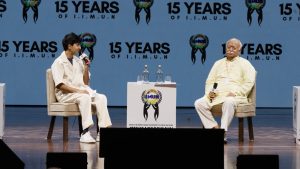
During the interactive session, Shri Hosabale addressed questions on Hindutva, secularism, demographic change, reservation policy, drug addiction and national security. He stated that the state must treat all religions equally while maintaining neutrality rather than appeasement in religious matters. On drug abuse, he emphasised the need for social awareness alongside firm action against international trafficking networks.
Calling for the “decolonisation of the mind” in the age of artificial intelligence and digital transformation, he urged society to adopt modern technologies while remaining rooted in indigenous perspectives and cultural values. He reiterated that anyone working selflessly for the nation embodies the spirit of a swayamsevak, irrespective of formal organisational association.
Concluding his address, Shri Hosabale urged youth to actively contribute to national development, stating that Bharat’s civilisational vision has an important role in guiding humanity and that collective efforts grounded in ethical values and social responsibility are essential for building a strong and harmonious nation.
The programme was attended by RSS Assam Kshetra Sanghchalak Dr. Umesh Chakravarty, Guwahati Mahanagar Sanghchalak Shri Guru Prasad Medhi, heads of educational institutions, faculty members and distinguished citizens, among others.